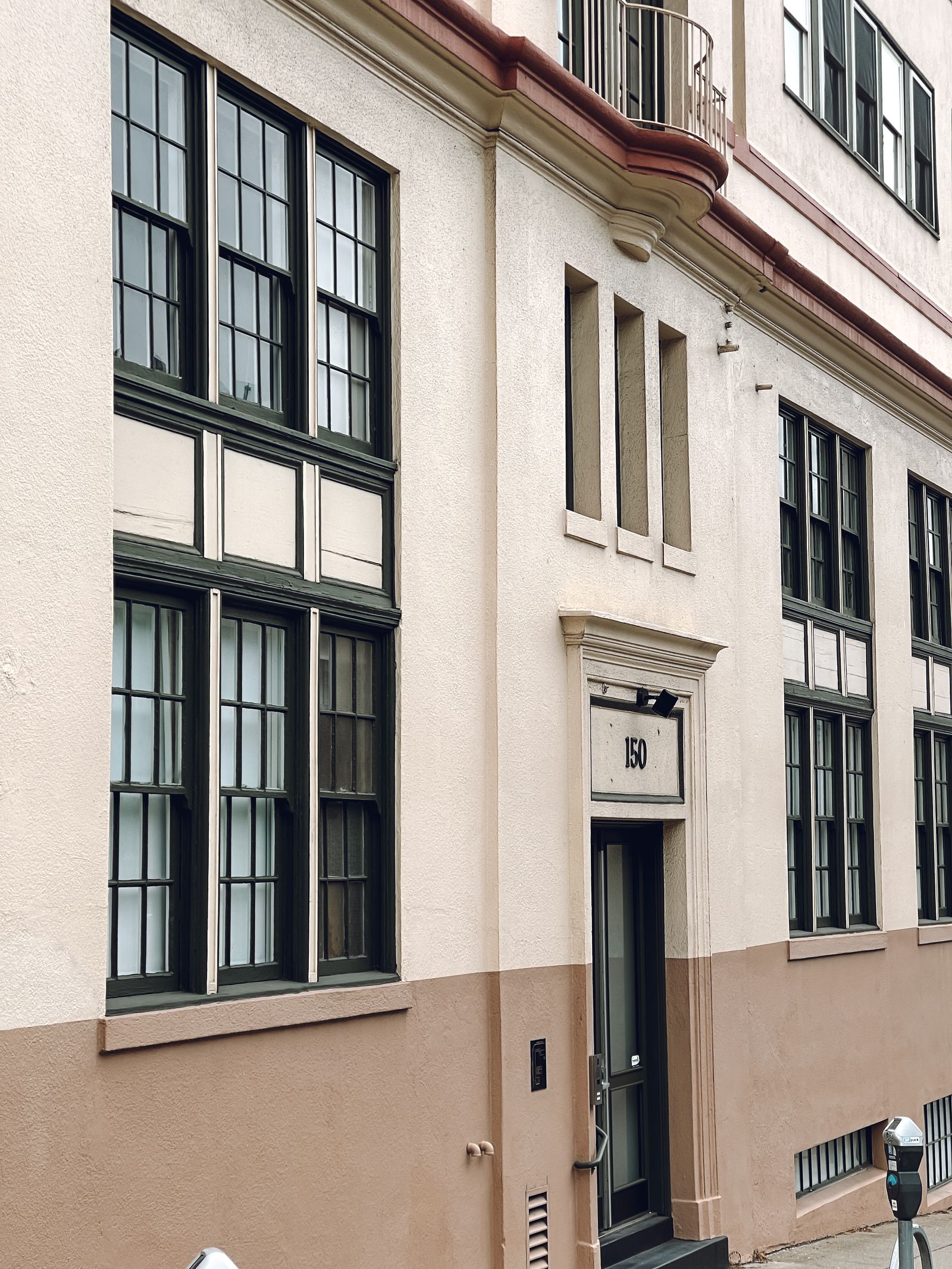
Inspect the Hilliard facade before choosing the wash
Hilliard commercial buildings commonly combine brick and mortar with precast concrete, painted block, stucco, EIFS, metal panels, glass, sealants, awnings, canopies, and repaired areas. Old Hilliard buildings may place storefront glazing close to sidewalks and neighboring businesses. Newer buildings along the Cemetery Road and Britton Parkway corridors may have larger setbacks but more doors, landscaping, signs, parking lanes, and shared access. A warehouse or service facility near US-33 or I-270 may add loading bays, dust, exhaust, fencing, and equipment that cannot be treated like an empty wall.
Soft washing can be appropriate for compatible organic growth, pollen, mildew-like staining, and some atmospheric film when the chemistry, dwell time, rinse, and protection plan match the substrate. It is not a fix for cracked masonry, open joints, failed sealant, corrosion, spalled concrete, roof leaks, failing paint, or damaged coatings. Dark streaks may also be minerals, oxidation, traffic film, or a repeat wetting path. A responsible estimate identifies likely conditions, test areas, included elevations, limitations, and visible defects that belong with another trade.
- Separate brick, mortar, concrete, glass, metal, stucco, EIFS, painted, and coated zones.
- Distinguish organic staining from salt, minerals, oxidation, dust, exhaust, and irrigation marks.
- Use representative test areas when coatings, repairs, or stain causes are uncertain.
- Keep restoration, leak diagnosis, glass polishing, and coating replacement outside routine washing.
Build the scope around Hilliard roads and property types
Cemetery Road is a major east-west gateway between Old Hilliard and I-270, so a property there may have steady turning traffic, visible storefronts, pedestrian movement, and time-sensitive access. Britton Parkway, Main Street, Avery Road, Leap Road, and Hilliard Rome Road each bring different curb cuts, sidewalks, lanes, nearby homes or businesses, and staging limits. A quote should identify the exact elevations and explain how hoses, barriers, vehicles, and a clean public route will be managed rather than simply naming a building square footage.
Old Hilliard and Main Street properties may need short hose runs, storefront protection, pedestrian spotters, tenant notices, and work before opening or after a busy period. Retail and medical buildings around Cemetery Road, Britton Parkway, and the I-270 corridor may need patient drop-off, accessible routes, air-intake protection, parking circulation, and a phased sequence that keeps a primary entrance available. Industrial, office, and warehouse properties near US-33 may need delivery, trailer, forklift, security, and loading-bay coordination. These operational details are part of a cleanable scope.
Plan for Central Ohio seasons and repeat wetting
Hilliard's spring pollen, humid summer weather, rain, thunderstorms, autumn leaf debris, winter freeze-thaw cycles, and road salt can create different exterior conditions through the year. North-facing brick, shaded entries, parapets, canopies, lower walls, and landscaping edges may stay damp longer and show organic-looking staining sooner. A sunny metal panel can dry quickly while an adjacent shaded masonry wall remains wet. Surface temperature, wind, lightning, rain probability, drying time, and public activity should all be reviewed before each phase.
When one wall darkens again, look for the water source before assuming the wash failed. Overflowing gutters, blocked scuppers, downspouts, irrigation spray, condensate, failed joints, roof-edge defects, and low drainage can repeatedly wet one section. Leap Road's documented drainage challenges are a useful reminder that water can follow site infrastructure in ways that are not obvious during a dry inspection. A cleaning crew can document the pattern for the owner, but should not present washing as a cure for a drainage or envelope defect.
- Review wind, rain, lightning, surface temperature, humidity, and drying time before setup.
- Check roof edges, gutters, downspouts, joints, irrigation heads, canopies, and low points.
- Protect plants, air intakes, finishes, equipment, and public routes from solution and overspray.
- Agree on pause and reschedule triggers before barriers, lifts, or aerial equipment are staged.
Keep occupied Hilliard sites moving
Before applying solution or rinse water, map every guest and employee door, accessible route, drop-off lane, loading bay, air intake, camera, electrical cabinet, sign, vehicle area, planting bed, and neighboring tenant path. An office may need work before arrival or in separated elevations. A clinic may need an uninterrupted patient route. A retail center may need tenant-by-tenant coordination. A warehouse may need a spotter for trailers and forklifts. The plan should name the person authorized to pause work when an unexpected pedestrian, vehicle, wind shift, or drainage path appears.
Hilliard parking lots and commercial drives may carry water toward curb inlets, swales, landscaped areas, detention features, or a neighboring entrance. Confirm water access, hose routing, barriers, spotters, security rules, emergency access, and low points before equipment arrives. Photos before and after each phase help the facilities team distinguish a cleaning result from pre-existing damage, remaining deposits, or a condition needing repair. Phasing is often the most practical way to keep a visible property open while the building improves.
Treat runoff and landscaping as planning items
Runoff planning depends on the products used, rinse volume, soil removed, grade, drain type, landscaping, and the property's stormwater requirements. A curb inlet is not automatic permission for treated water to enter it. Depending on the site, controls may include diversion, collection, recovery, reduced rinse volume, filtration, plant protection, disposal, or coordination with the responsible authority. The estimate should state its assumptions and what happens if observed flow differs from the expected route.
Irrigation overspray can leave a narrow stain below a planter, tree bed, or lawn edge, while a storm can expose a flow path across a sidewalk or toward a parking-deck ramp. Watch the first rinse, verify that protection remains effective, and pause if water moves toward a doorway, neighboring property, stormwater feature, or public route. Cleaning can remove a symptom, but the owner may still need irrigation adjustment, gutter work, sealant repair, or a drainage investigation.
Match access to the elevation, not just the height
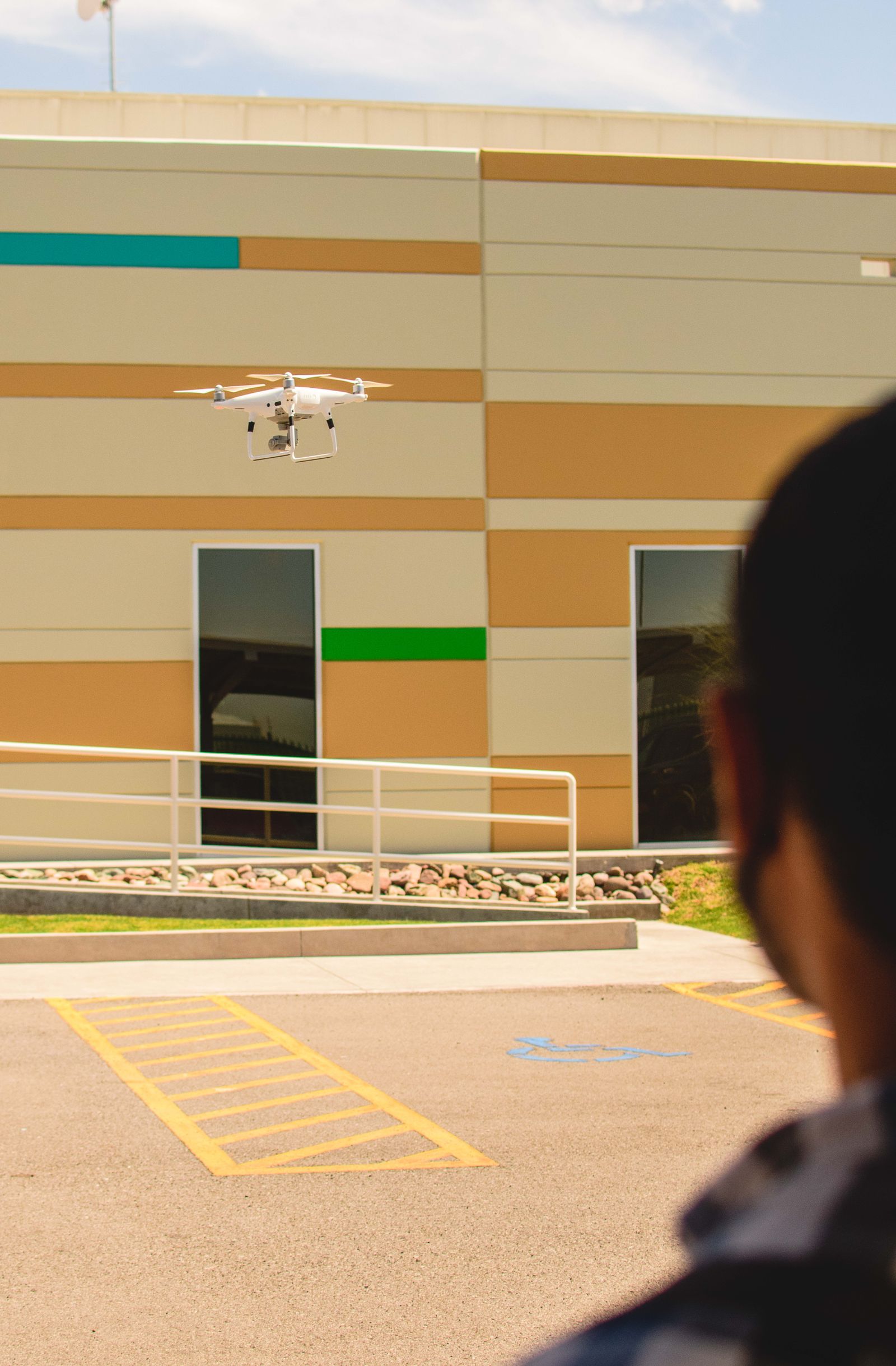
Aerial assistance may be considered for a suitable broad upper wall when facade compatibility, wind, stand-off distance, launch and recovery space, visual control, public separation, and drainage support the work. It can help reach selected parapets, ledges, sign bands, and tall walls, but it cannot detail contact-sensitive glass, brush a recessed feature, remove bonded mineral scale, inspect concealed defects, or repair masonry and coatings. The proposal should label aerial, lift, pole, roof, ground, and hand-detail areas separately.
Hilliard sites can include overhead utilities, mature trees, rooftop equipment, cameras, fences, active roads, narrow staging, and nearby public movement. Commercial drone operations also require the applicable FAA framework and site-specific operating judgment. If wind, people, vehicles, airspace, launch space, or visual control make aerial work unsuitable, a lift, water-fed pole, ground setup, or hybrid plan is the better choice. Height alone should never decide the method.
Request a quote with the details that change the work
Send the Hilliard address, building use, approximate height, facade materials, problem elevations, operating hours, desired timing, water access, nearby drains, irrigation concerns, access restrictions, and any known leaks, loose material, coating failure, or previous cleaning damage. Photos of the main entrance, a shaded wall, upper elevation, roof edge, loading area, windows, landscaping, and parking-side drainage make the initial conversation more useful. Mention whether the goal is a tenant turnover, event-ready appearance, recurring maintenance, sale preparation, or focused stain correction.
Call +1 239-351-2897 or email contact@dronebuildingcleaners.com to discuss a Hilliard property. Drone Building Cleaners can help determine whether soft washing, controlled pressure, aerial assistance, or a hybrid method fits the building, then prepare a quote around elevations, access, protection, weather, drainage, limitations, and work that should be handled by another trade.